

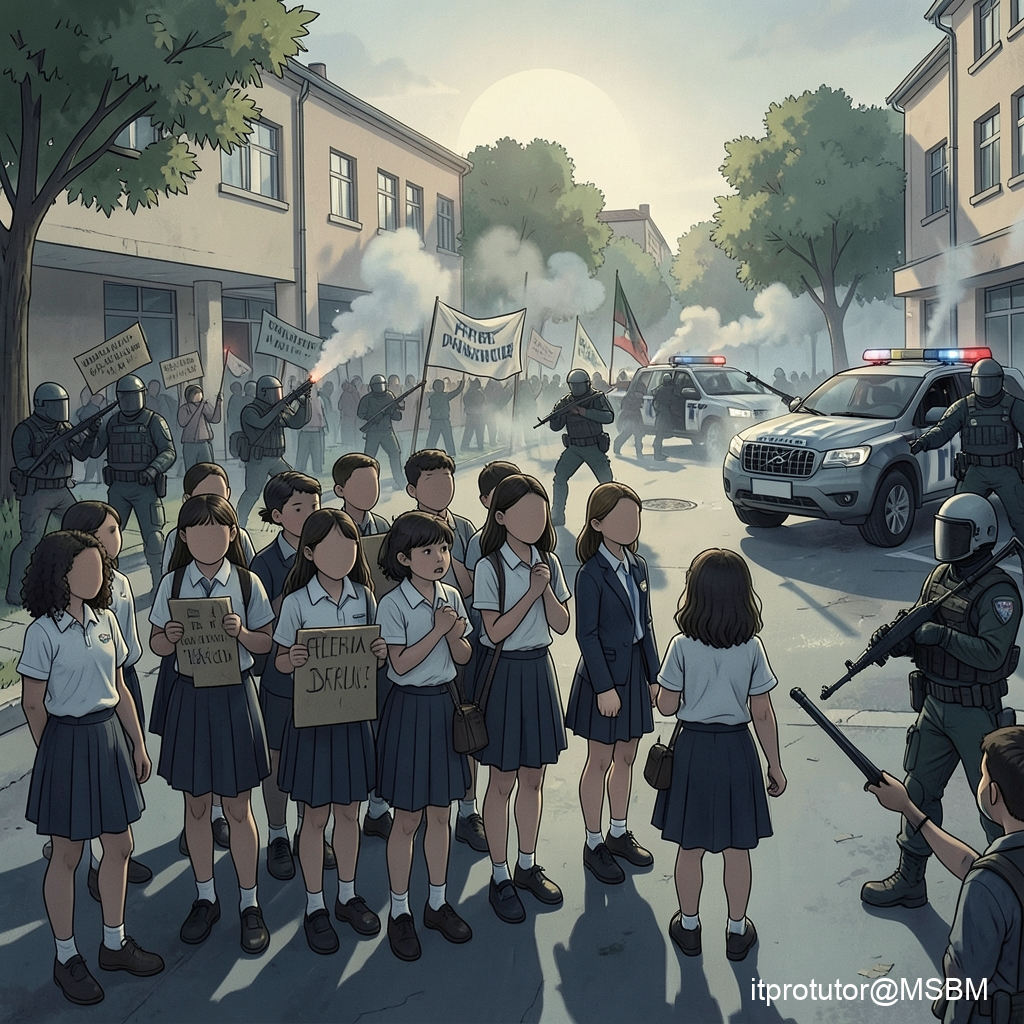
When a system treats its own end-users as hostile threats instead of patching critical infrastructure bugs, total architectural failure is inevitable.
In France, secondary school students legitimately protesting shameful conditions in their schools have been met with horrifying, disproportionate state force. Teenagers aged 14 to 16 have suffered catastrophic, life-altering injuries—including severed hands, facial fractures, and blindness—caused by police stun grenades, teargas, and LBD rubber-bullet launchers. As technologists and system thinkers, we must evaluate governance through the lens of structural integrity and the Principle of Proportionality, alongside the UN Convention on the Rights of the Child.
In systems engineering, when user feedback loops highlight degrading operational environments, responsive maintenance is mandatory. Suppressing the signal through extreme punitive measures does not resolve the underlying fault; it merely masks corruption until the entire framework collapses. This raises a pressing ethical question: When a democratic state deploys riot-grade crowd suppression against children reporting structural defects, has the social contract broken beyond repair? How can we expect future generations to uphold societal protocols when authority answers legitimate bug reports with algorithmic brutality?
—
當一個系統將回報缺陷的弱勢使用者視為惡意威脅並施以暴力壓制,整個治理架構便已面臨系統性崩潰。
法國中學生近期走上街頭抗議日益惡化的校園環境,卻遭到國家警力的殘酷對待。年僅 14 至 16 歲的未成年學子,竟在催淚彈、橡膠子彈(LBD)及震撼彈的直接打擊下面臨下顎骨折、永久失明甚至斷肢的慘劇。從 IT 系統架構與治理原則來檢視,這項舉措嚴重踐踏了法治中的「比例原則」(Principle of Proportionality)以及《聯合國兒童權利公約》。
在軟體工程中,當節點傳回系統異常報告(Error Reports)時,架構師的職責是修正底層漏洞,而非以暴力手段中斷回饋迴圈。這引發了深刻的反思:當治理者選擇以應對暴動的武力來封殺學生的合法訴求,社會契約的信任協議是否早已蕩然無存?當體制寧可消滅發出警訊的人,也不願修補破敗的公共基建時,我們又該如何防範這場體制性崩潰的蔓延?
#HumanRights #SocialGovernance #YouthVoices #ITProTutor
Source: The Guardian