

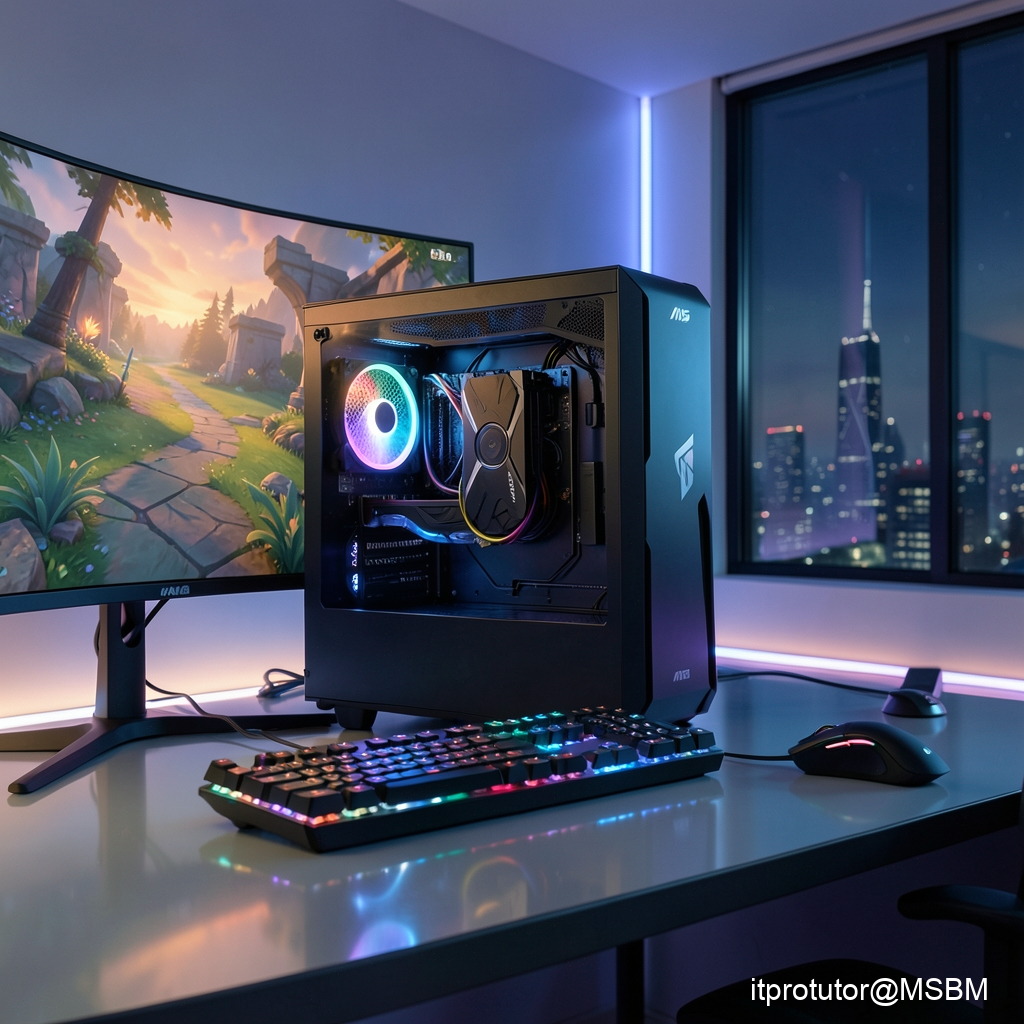
Is flagship hardware pricing spiraling entirely out of control, or are we witnessing the systematic normalization of extreme tech inflation?
A recent report by Tom’s Hardware spotlighted an MSI Infinite ZS prebuilt gaming PC carrying an astonishing price tag of $7,599. When you calculate the retail value of the supporting components—such as the high-end CPU, motherboard, memory, chassis, and power supply—they tally up to roughly $2,300. This implies that buyers are effectively paying an exorbitant $5,300 solely for NVIDIA’s flagship GeForce RTX 5090, representing a massive markup over its official MSRP.
From an IT and engineering economics perspective, this illustrates classic opportunism fueled by supply-demand asymmetry and high “Willingness to Pay” (WTP). Because top-tier silicon now doubles as a potent workstation tool for local generative AI training and heavy compute workloads, system integrators are bundling GPUs into expensive prebuilts to capture enterprise-level margins from consumer audiences. However, this raises serious questions regarding the *Law of Diminishing Marginal Utility*: does a marginal boost in rendering throughput and tensor performance genuinely justify paying more than double the component’s true base value? Moreover, has MSRP essentially become an obsolete metric in modern hardware distribution?
As professionals and enthusiasts, where do we draw the ethical and economic line between market-driven premium pricing and predatory commercial exploitation? Would you ever justify buying an overpriced prebuilt just to secure access to next-generation computing power?
—
硬件價格正在徹底失控,還是我們正被迫接受頂級硬件「極度奢侈品化」的新常態?
根據 Tom’s Hardware 報導,微星(MSI)推出了一款要價高達 7,599 美元的 Infinite ZS 旗艦預裝電競主機。在拆解其物料清單(BOM)後可發現,周邊的高階處理器、主機板、RAM、儲存裝置與電源等組件,市場合計價值約為 2,300 美元。這意味著消費者為了獲得單張 NVIDIA GeForce RTX 5090,實際需付出高達約 5,300 美元的代價,溢價幅度令人咋舌。
從 IT 系統架構與市場經濟學的角度剖析,這種定價手法展現了由供需失衡所驅動的「消費者支付意願(WTP)」剝削現象。如今頂級顯卡不再僅用於 4K 遊戲,更被廣泛視為本地端 AI 模型推論與輕量訓練的生產力工具;整機商藉由綁售策略,將算力溢價轉嫁給終端市場。但這也引發了深層反思:依據「邊際效用遞減法則(Law of Diminishing Marginal Utility)」,些微的運算效能提升是否真能支撐翻倍的成本支出?當官方建議零售價(MSRP)名存實亡,整個硬件生態鏈的信任成本又該由誰承擔?
身為 IT 人員與科技愛好者,您認為消費級硬體定價與製造成本脫節到何種程度,才算踩破了合理的商業道德底線?您會為了搶先部署頂級算力而向這種套裝加價策略妥協嗎?
#RTX5090 #GamingPC #TechEconomics #ITProTutor
Source: Tom’s Hardware